
MOT history: what it tells you and how to read it
Every UK car over three years old has a public MOT record. It is one of the most honest portraits you will ever get of a car you own or are thinking about buying, and almost no one reads it properly. This guide changes that.
What is an MOT test, really?
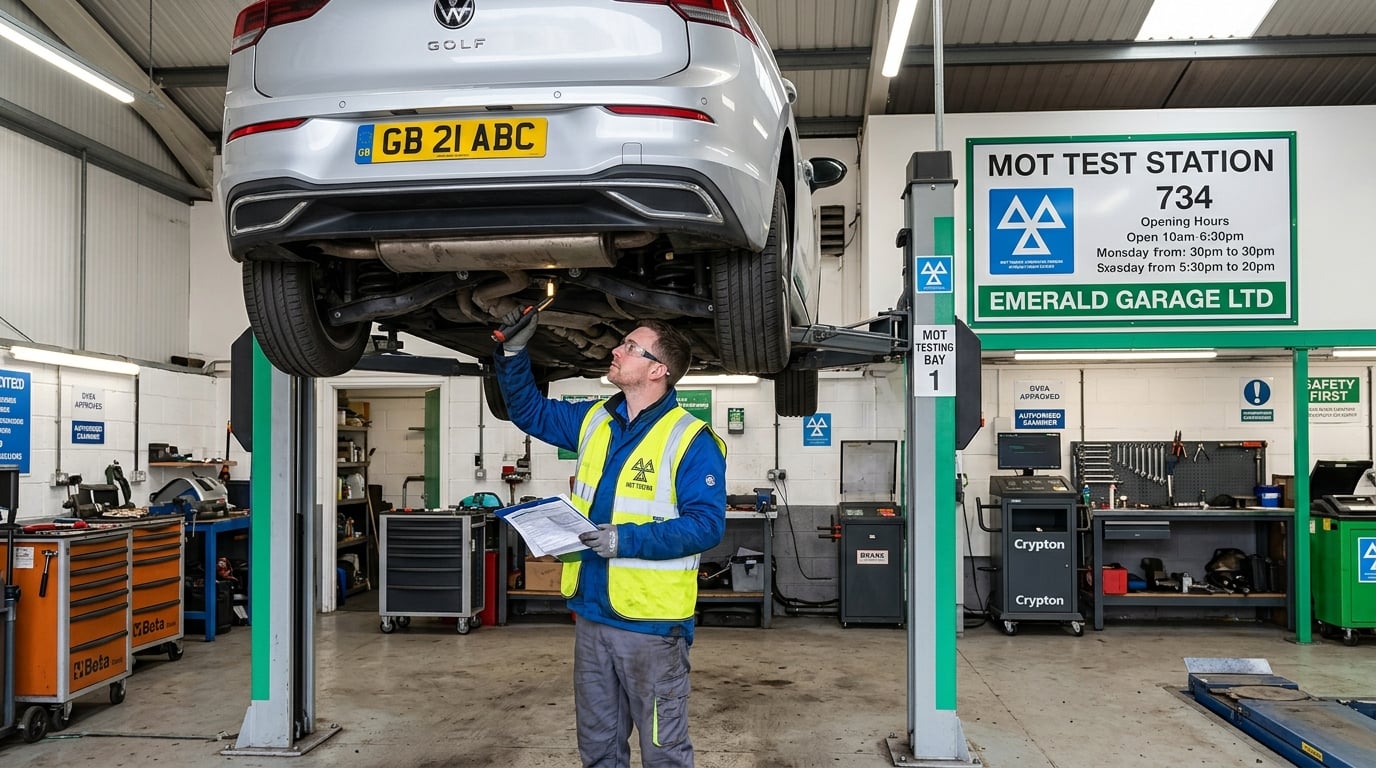
An MOT is an annual safety and roadworthiness check, mandatory for most UK vehicles over three years old. A licensed tester inspects around 150 items covering brakes, steering, suspension, tyres, lights, emissions, body structure, wipers, mirrors, seatbelts and the VIN.
The result is one of four outcomes:
- Pass: the car is roadworthy. Some advisories may still be noted.
- Pass with advisories: passed, but the tester flagged items that will need attention soon.
- Fail (minor): minor defects that mean the car cannot pass without being fixed.
- Fail (major or dangerous): the car should not be driven until the defect is repaired.
Every test, every result, every advisory and every failure item is stored by the DVSA and made publicly accessible via their MOT History API, which is what moValue pulls from when we show you a car's history.
What to look for in a history
A clean MOT history does not mean a car is mechanically perfect, but it is a strong signal. When you view any car's MOT history on moValue, here is how to read it critically:
1. Look at the odometer trajectory
Mileage at each test should climb smoothly. A big jump (say 25,000 miles in one year on a car that previously averaged 8,000) suggests a period of heavy use, possibly as a rental, taxi or company car. A sudden drop is a red flag for clocking (odometer tampering), which is illegal and unfortunately not rare.
If the mileage plateaus for two or three years in a row, the car was probably barely driven. That can be good (less wear) or bad (seals drying out, tyres degrading, battery issues), depending on the model.
2. Read advisories, not just the headline result
Advisories are the tester saying "this is OK now, but it needs attention soon." They are the most useful part of the history because they tell you what the next owner will need to fix.
Pay particular attention to:
- Repeated advisories. A tyre listed as worn in 2023, 2024 and 2025 but never replaced signals an owner who cut corners on maintenance.
- Advisories on structural parts. Corrosion in sills, subframes, brake pipes or suspension mountings is expensive to fix. One mention is worth investigating; three mentions is a deal-breaker.
- Oil leaks. Small leaks often become big leaks on older cars.
- CV joints and track rod ends. Cheap to fix individually, but an indicator of general wear.
3. Track the failure rate
An occasional first-time fail is normal: tyres wear, bulbs blow. Three or four consecutive first-time fails suggests either a chronically ageing car or an owner who treated the MOT as the moment they finally did the repairs, rather than staying on top of things. The latter pattern often carries through to parts not covered by the MOT (timing belt, clutch, gearbox, coolant hoses).
4. Check for mileage consistency with age
The average UK car covers around 7,400 miles a year. A car with 120,000 miles at ten years old is normal; a car with 60,000 miles at ten years old has either been lovingly garaged or was a second car that rarely ventured out. A car with 180,000 miles at ten years old has been worked hard.
Red flags we see most often
- Gaps in testing. A missing year or two can mean the car was SORN'd (off-road), which is fine, or that it genuinely failed badly and the owner scrapped plans to repair it.
- Mileage going backwards. Classic clocking indicator. If you are buying, walk away.
- Emissions advisories on modern diesels. Often signals impending DPF or turbo issues.
- Corrosion advisories on exhausts or subframes. Common on cars kept near the coast or driven in winter salt; always costs money.
- Same advisory year after year with no action. Indicates deferred maintenance.
How to use MOT history when selling
Most private buyers will check a car's MOT history before they come to view, so you cannot hide anything. The right move is to pre-empt it:
- Fix any standing advisories before you list. Even cheap fixes (£20 lightbulb, £60 tyre swap) dramatically reduce buyer excuses to haggle.
- Write the history into your listing: "Full MOT history, longest interval 11 months, no failures in the last 4 years, advisories addressed within 2 weeks." Buyers trust what they can verify.
- Keep receipts. Being able to show "tyre advisory from 2023 was actually replaced by Kwik Fit on 14 March 2023" removes doubt instantly.
How to use MOT history when buying
- Run the reg plate through moValue before you even drive to see the car. Ten minutes of reading saves a wasted afternoon.
- Ask the seller about any repeated or ignored advisories. Their answer tells you how well the car was cared for.
- Use advisories as haggling leverage. "The 2024 MOT flagged rear brake pads as close to worn, those still need doing, I'll need to take that off the price."
- Note the testing station. A car consistently tested at the same reputable independent is often a good sign; one tested at a different station each year (and each one two weeks before expiry) sometimes suggests shopping for a pass.
One thing MOT history will not tell you
The MOT does not inspect the engine internally, nor the gearbox, clutch, cooling system or timing belt / chain. Plenty of terminal mechanical problems happen between MOT checks. The MOT history is a necessary check, but not a sufficient one. For big-ticket hidden issues (finance outstanding, accident write-off, stolen status), run a full vehicle history check from a service like carVertical in addition.
How moValue helps
On every car valuation, we show you the complete MOT history straight from the DVSA: every test, every advisory, every failure item, every odometer reading. We also calculate pass rates and flag mileage anomalies automatically. It is free, it is part of the standard valuation, and you do not need to create an account to see it.
Related Guides

Go beyond the MOT record
moValue shows the MOT history for free. For a full check covering finance, theft, write-off and mileage, our partner carVertical pulls records from 900+ data sources across Europe.
- Outstanding finance & theft checks
- Accident damage & write-off history
- Mileage verification across Europe
Affiliate link. moValue earns a small commission at no extra cost to you.
Check any UK car's MOT history free
Enter a reg and see the full official record in seconds.
Check a reg