
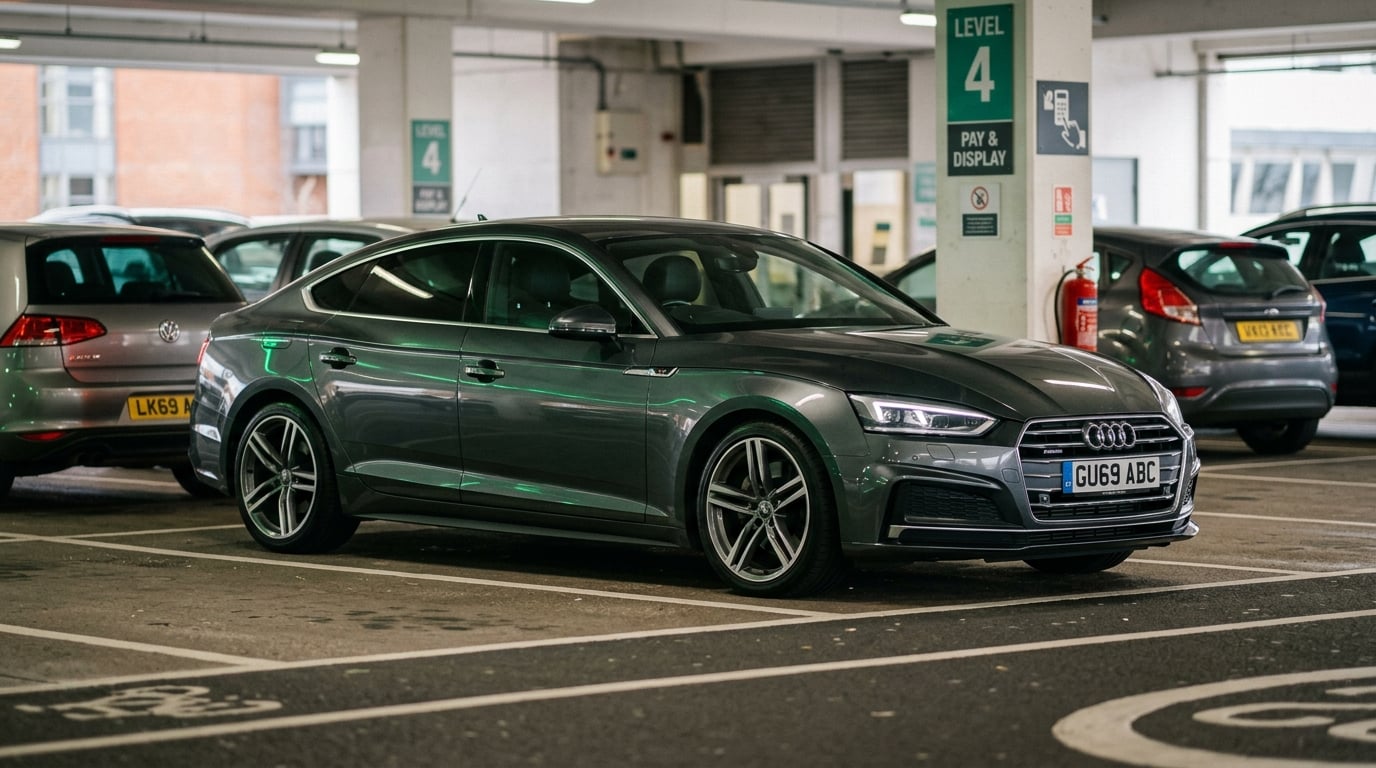
Car depreciation explained: why your car loses value
For most UK households, depreciation is the largest running cost of owning a car, bigger than fuel, insurance, tax and servicing combined. It is also the cost almost nobody tracks. Here is what is really happening to your car's value, and what you can do about it.
What depreciation actually is
Depreciation is the difference between what you paid for a car and what you get when you sell it, expressed over time. If you bought a Ford Focus for £25,000 new and sold it three years later for £15,000, the car has depreciated £10,000, or about £3,333 per year. That is real money leaving your household, even though you never write a monthly cheque for it.
The rough UK depreciation curve
Every car is different but the general pattern for a typical mainstream UK petrol or diesel is:
- Year 1: 20 to 30 percent loss from new RRP. The biggest single drop.
- Year 2: a further 10 to 15 percent.
- Year 3: a further 8 to 12 percent.
- Years 4 to 7: roughly 8 to 10 percent per year, compounding on a shrinking base.
- Years 8 onwards: depreciation slows to 5 to 7 percent per year, and may even flatten entirely for classic-future models.
Overall, most mainstream cars have lost 55 to 65 percent of their value by year 5. Premium brands (Audi, BMW, Mercedes) typically lose a bit more of their new price over five years but hold their absolute value better on the used market.
What drives depreciation
Brand and model desirability
Some models are genuinely wanted by used buyers (Toyota Corolla, Honda Jazz, Porsche 911, Suzuki Jimny) and hold their value unusually well. Others are aggressively discounted when new, which sets a low used-market ceiling (some Korean large saloons, some premium diesel estates in the 2020s). If you are buying new and resale matters, this is the biggest lever.
Mileage
Every 10,000 miles above the UK average (about 7,400 per year) typically knocks £300 to £800 off the value depending on the model. Low-mileage cars attract a premium, but extremely low mileage can actually hurt value: a seven-year-old car with only 12,000 miles raises questions about seized brakes, perished rubber seals and a battery that has been on a charger for longer than it was driving.
Condition and service history
A full main-dealer service history can add 5 to 10 percent to resale vs. no history. Fresh MOT, clean bodywork, and a tidy interior each lift the value a bit more. The inverse is also true: unrepaired damage, scratches, kerbed alloys and a scuffed interior collectively knock off more than the cost of fixing them.
Fuel type and emissions
In 2026, petrol hybrids are the strongest residuals. Pure petrols are stable. Diesels have been hit hard in cities introducing clean-air zones. Early EVs (2018 to 2020) have seen sharper depreciation as battery tech has improved, but newer EVs (2023 onwards with 300+ mile range) are holding up better. Plug-in hybrids sit in the middle, strong on urban use, less appealing as tax rules tighten.
Colour and spec
Popular colours (white, black, silver, grey) are easier to sell and hold value fractionally better than unusual colours. High-spec trims with desirable options (panoramic roof, parking sensors, cruise control, leather) add real money to a used value; exotic options (neon green exterior, custom upholstery) rarely do.
UK depreciation by segment (typical 3-year residuals)
These are 2025 UK averages, expressed as the percentage of original RRP you would get back selling privately at three years old:
- City cars (Toyota Aygo, Fiat 500, Hyundai i10): 50 to 60%.
- Superminis (Ford Fiesta, VW Polo, Seat Ibiza): 45 to 55%.
- Small hatchbacks (Golf, Focus, Astra): 45 to 55%.
- Family SUVs (Qashqai, Sportage, Tucson): 50 to 60%.
- Premium compact (A3, 1 Series, A-Class): 50 to 60%.
- Premium executive (A6, 5 Series, E-Class): 45 to 55%.
- Large luxury (S-Class, 7 Series, A8): 35 to 45%.
- Sports cars (Porsche 911, Cayman, 718): 65 to 80% (yes, higher than new).
- EVs (Tesla Model 3, Kia e-Niro, Polestar 2): 40 to 55% (improving in 2025/26).
How to slow depreciation on a car you already own
- Service on time, every time. The gap between a full and a partial history is worth more than the services cost.
- Stay on top of advisories. Fix them promptly so your MOT history stays clean.
- Keep mileage moderate. Running at the UK average is the sweet spot.
- Protect the bodywork. A quality cover if outdoors, alloy wheel insurance if parking on street, a dash cam against minor collisions you did not cause.
- Keep the interior immaculate. No smoking, no spillage (a £5 cup holder mat saves £200 in detailing), cover back seats if you have kids or dogs.
- Time the sale well. Spring and early summer are typically the strongest used-car months in the UK. January and August are weakest.
- Sell privately if you have time. Three to six percent gap between private and instant buy on a £10,000 car is £300 to £600 straight into your pocket.
How to buy a car that depreciates less
If resale matters when you buy:
- Buy used, at three years old. The first owner has absorbed the biggest hit.
- Pick a popular body colour and a mid-trim spec that has the options most buyers want.
- Stick to mainstream Japanese, German or Korean brands known for reliability and residuals.
- Avoid heavily discounted new cars: the discount is priced in to future residuals.
- For EVs, look for battery warranties that transfer to the next owner, and ranges of 250+ miles.
Why moValue tracks depreciation over time
For every car we value, we also show you a 3-year depreciation forecast and a 6-month price-trend chart based on current market data. That way you can see not just what your car is worth today, but whether it is a good moment to sell or whether waiting a month or two might actually help.
Related Guides
See your car's depreciation curve
Free, includes a 3-year forecast and 6-month price trend.
Value my car