

Winter car checklist: 12 checks to do before the cold sets in
Maintenance2 min read
By Juan Pedro Nguema · Updated
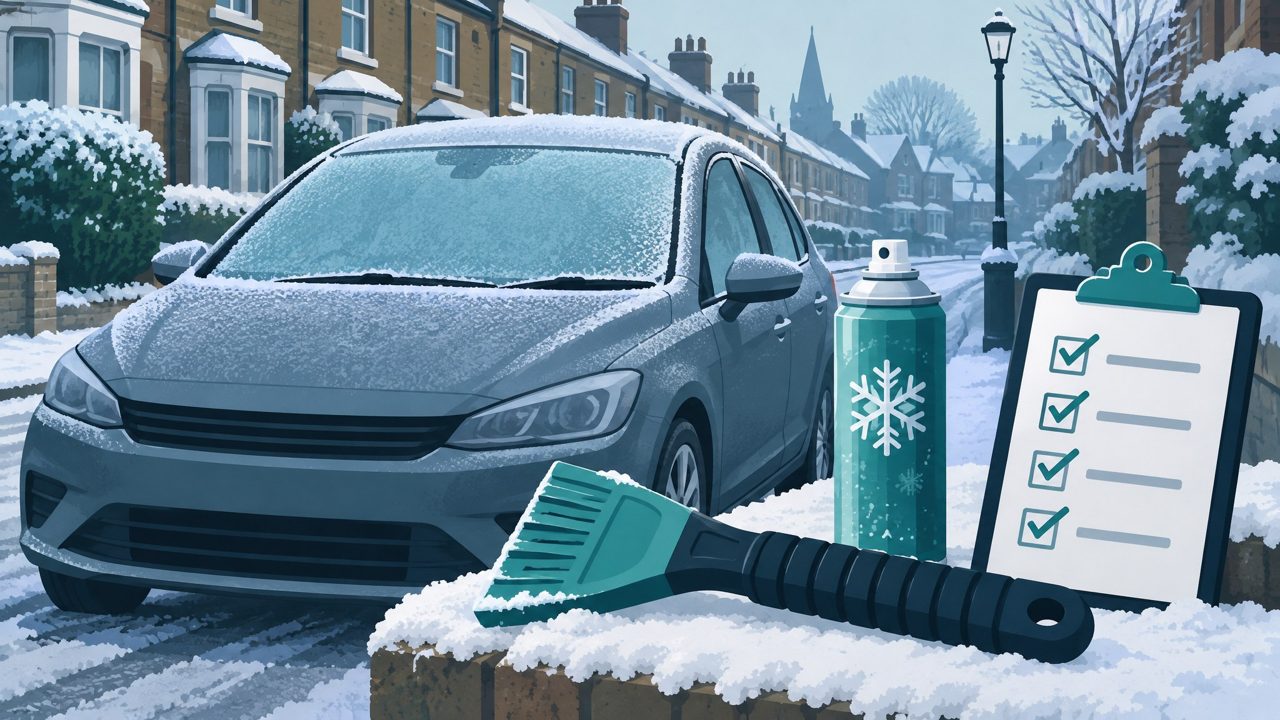
In short: Most winter breakdowns and crashes are easier to avoid than you think. Spend 20 minutes on these checks in late autumn, then keep an eye on them every week.
Under the bonnet
- Antifreeze in the coolant. The Highway Code says to make sure there's antifreeze in the radiator before winter. If you're not sure, a garage can test it quickly.
- Screenwash with antifreeze. Plain water freezes in the bottle and on the screen. Use a winter screenwash.
- Battery. Cold weather is hard on batteries. If the car is slow to start, or the battery is more than about 5 years old, get it tested.
- Fluid levels, weekly. Check oil, coolant and brake fluid at least once a week. Low brake fluid can lead to brake failure.
Tyres
- Tread depth. The legal minimum for cars is 1.6mm across the central three-quarters of the tread, all the way round. Many experts recommend more for winter.
- Pressures, when cold. Check weekly before a journey, when the tyres are cold, using the figures in your handbook.
- Damage. Look for cuts, bulges and uneven wear. Uneven wear can point to a brake, suspension or alignment problem.
Seeing and being seen
- Lights. Walk round the car with all lights on. Lights, indicators, reflectors and number plates must be kept clean.
- Wipers. Replace blades that smear or squeak.
- Clear every window before you go. You must be able to see out of every window. Clear snow from the roof too, so it can't slide down onto your screen or fly off onto other drivers.
Be ready for trouble
- Winter kit in the boot: ice scraper and de-icer, a torch, a blanket and warm clothes, boots, food and a drink, a phone charger, a shovel, and a hi-vis vest. The Highway Code suggests taking an emergency kit if you must travel in snow and ice.
- Plan. Check the weather and your route. If snow or ice is forecast, ask yourself whether the journey is essential.
What to buy (and what to look for)
| Item | Look for |
|---|---|
| Ice scraper | A wide blade and a brush for snow |
| De-icer | Trigger spray; keep it in the house, not the frozen car |
| Winter screenwash | Rated for low temperatures (e.g. −10°C or lower) |
| Tyre pressure gauge | Digital, easy to read |
| Portable jump starter | Enough power for your engine size; recharge it monthly |
| Torch | LED, with spare batteries or USB charging |
| Foil blanket / warm blanket | Light and easy to store |
If any links on this page are affiliate links, they're clearly marked. We may earn a small commission at no extra cost to you, and it never changes what we recommend.
Did you know?
Driving on ice can make stopping distances up to ten times longer than on a dry road. In ice and snow, drive slowly in as high a gear as possible, and brake and steer gently.